Elementary
Elementary Overviews and Features
Curriculum Overview: 1st Grade
The thrust of the grade 1 program focuses on providing the students with the skills necessary to become strong readers, writers and speakers. The students will participate in reading, writing, and oral activities simultaneously. The main goal of this program is to provide the students with the strategies necessary to become efficient in Language Arts.
Features of the 1st Grade Program
Reading/Language Arts
(We will assist our learners in…)
- Using long and short vowels
- Identifying parts of a book
- Noting details in a story
- Choosing the best title
- Alphabetizing to the first letter
- Identifying before/after
- Listening and follow directions
- Comparing and contrast stories
- Identifying rhyming words/sounds
- Identifying story elements
- Comprehending reading material at grade level
- Expressing ideas orally
- Demonstrating good listening behavior
- Identifying and read basic sight words and vocabulary words
- Demonstrating mastery of letters
- Using sound/symbol relationships
- Retelling, dramatizing, or dictating a story
- Demonstrating an awareness of classroom reference materials
- Explaining the difference between fiction and non-fiction stories
Writing Skills
(We will assist our learners in…)
- Printing first and last name
- Printing daily work legibly
- Using descriptive language
- Beginning journaling; expressing thoughts in written form
- Understanding plurals
- Beginning to write complete sentences
- Beginning to use appropriate punctuation
- Recognizing action and naming words
- Developing characters
- Recognizing story patterns
- Becoming aware of multi-cultural literature and language
In addition grade 1 students will participate in guided reading, shared reading and writing activities.
Guided Reading
Each team meets with the teacher once a week. Reading strategies are practiced and reinforced during each team reading session. As a student’s reading level changes, he or she will move to a team that best meets his or her reading level. While reading teams are in session, other students are involved in the independent literacy activities.
Shared Reading
Shared Reading will provide grade 1 students with an opportunity to gather at the carpet and share in the reading experience. Enlarged text is a must! We will use Big Books (purchased or teacher created) and Charts (poems/songs/rhymes/chants). Many of our science and social studies standards are covered during our shared reading time. Our shared reading routine will generally follow the same pattern. We will enjoy reading the selections, discussing them, generally familiarizing ourselves with them, and add them to our poetry binder.
Shared Writing
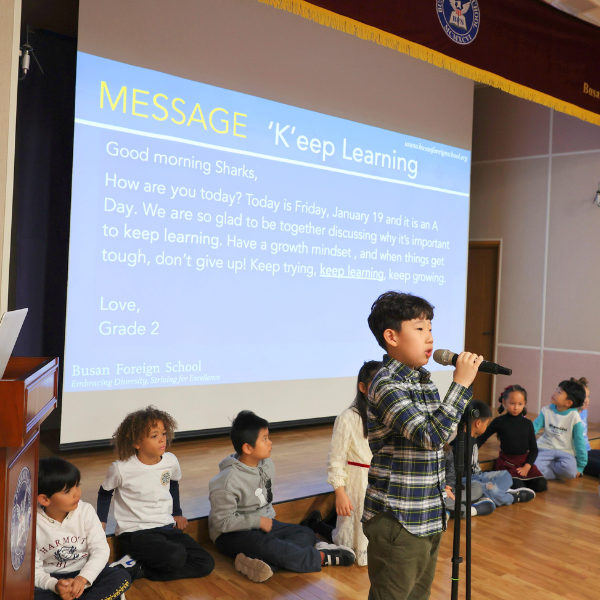
Shared (interactive) writing means teacher sharing the pen with students while writing. Shared writing can include anything from class books, morning message, nursery rhymes, and poetry.
Mathematics
(We will assist our learners in…)
- Classifying numbers: greater/lesser, even/odd
- Problem solving
- Reproducing repeating patterns
- Identifying money: penny, nickel, dime, quarter, half-dollar, dollar
- Adding and subtracting facts to ten
- Rote counting to 100
- Identifying and writing numbers to 100
- Telling time to the hour and half hour
- Understanding place value of: ones, tens, and hundreds
- Estimating and measuring in inches and centimeters
- Counting in multiples of 2, 5, and 10 to 100
- Beginning to use simple fractions
- Identifying days of the week, months of the year, number words, and color words
- Comparing, sorting, and classifying geometric shapes
- Making and reading a simple graph
- Organizing data using tally marks
Social Studies
(We will assist our learners in…)
- Describing the qualities of good citizenship in the home, school, and community
- Interpreting and use simple maps
- Explaining the purpose of government
- Demonstrating the concepts of: goods and services; producers and consumers; wants and needs
- Distinguishing between past, present, and future
- Exploring diverse cultures
Science
(We will assist our learners in…)
- Classifying groups of living/nonliving things
- Showing awareness of the five senses
- Investigating weather patterns
- Exploring the earth’s surface: land and water
- Beginning to use the scientific method
- Identifying the parts of a plant and an insect
- Developing an awareness of the water cycle
- Using scientific knowledge to ask questions and make observations
Health
(We will assist our learners in…)
- Identifying and describe the systems of human body
- Describing common feelings and their expression
- Recognizing the five senses and their role in human growth
- Distinguishing types of teeth and practice proper brushing and flossing
- Recognizing the importance of taking care of their body and learn everyday health habits
- Examining the role of food choices and use the Food Guide Pyramid
- Recognizing the signs of illness and allergies and practice ways to avoid the spread of germs and disease
- Identifying rules for the safe use of medicine and recognize the effects of on the body of common drugs
- Identifying safety rules on the street
The first grade curriculum also includes seven hours of extra-curricular classes each week. These classes include: one hour of art, one hour of computers, one hour of library, one hour of music and three hours of physical education.
Features of the 2nd Grade Program
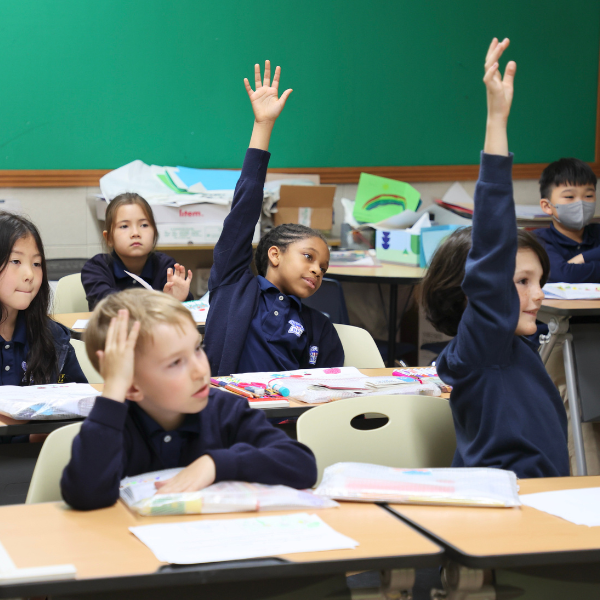
Grade two is an exciting and academically challenging time for students of Busan Foreign School. They are actively engaged in working together collaboratively on hands-on projects, assignments, and cooperative learning activities that help them to further develop the skills learned in grade one. Part of the grade two program entails students being active participants in their own learning in and outside of school.
Our students, with the guidance of their teacher, are given time to explore and develop their strengths in a positive and supportive learning environment. The second grade curriculum has been created in awareness that students learn different and at different ways. Students are given approximately thirty to forty-five minutes of homework each day and are expected to complete their homework daily.
Curriculum Overview: 2nd Grade
Language Arts – The Language Arts program in grade two provides students the opportunity to develop their reading, writing, speaking, spelling, vocabulary, and listening skills. Through the examination and study of various texts and the completion of written assignments, students will strengthen their reading, writing, and oral skills.
Mathematics - The Math program provides students the opportunity to explore math through a collection of investigations, predictions, explorations, and activities. By the end of grade two, students will have covered the following concepts:
- Students will understand and use numbers up to 1,000.
- Students will solve addition and subtraction problems involving two and three-digit numbers
- Students will understand that fractions may refer to parts of a set and parts of a whole.
- Students will model and solve simple multiplication and division problems.
- Students will identify and describe the attributes of plane and solid geometric shapes.
- Students will understand the concept of time and units.
- Students will understand the concept of measurement.
- Students will understand the concept of adding and subtracting amounts of money.
Science - The Science program builds on students’ previous experiences and engages them with various activities and investigations in which they are encourage predicting outcomes and then testing their predictions through first-hand experiences. Students will be able to collect and record data, predict results, discuss different science concepts and communicate about science concepts through talk and written language.
Social Studies – The Social Studies program emphasis is on historical knowledge, civics and government, geography, economics, society, and culture. This program will encourage students to gain an understanding of American, Korean, as well as global current events.
Health - The Health program provides students the ability to develop an understanding of ways in which personal health and wellbeing can be enhanced and be maintained.
Curriculum Overview: 3rd Grade
The following is a brief description of the topics we will be covering in third grade for 2009-2010. All textbooks are from Harcourt.
In Writing, students keep a Writing Journal where they create stories and paragraphs while practicing new grammar learnings and writing techniques, using steps of the writing process. The spelling program coincides with the basil reader textbook. Students will practice building their vocabulary, understand parts of a sentence and punctuation, practice paragraph writing, and learn about how to create various effects on the reader through writing. This is in hopes that students will learn to love writing as another form of expression in English.
Students will participate every morning in the BFS reading program Drop Everything and Read (D.E.A.R.). During this period, students will have an uninterrupted silent reading time to allow them an opportunity to gain confidence and find a passion for books of their choice.
In Reading, students will follow a basil textbook, supplemented by individualized short books, which students may practice at home as well. This will provide examples of ways that authors craft words to create feelings and various reactions. We will also listen to various read-aloud novels throughout the year to improve listening skills and for enjoyment.
In Math, students will have a thorough understanding of place value, which will assist them in addition, subtraction, multiplication, and division. We will study money, graphing, figures in geometry, measurement, and fractions. Students will also solve a Problem of the Day, which consists of some word problem to practice or reinforce skills learned.
Our Social Studies text is titled “Communities.” Students will be exploring differences between communities around the world and in Busan’s sister cities. We will explore United States geography and history and relate it to our current community. Students will study citizenship and government, business in a community, and people of the world.
In science we will be studying units on: plants and animals, and the various interactions that take place between them. Other exciting themes this year will be: the Earth’s surface, patterns on the Earth and in space, matter, energy, forces, and motion. Students will practice the scientific method and investigating using questioning.
In health, we will investigate the human body, emphasizing things we can do to keep our body healthy and to keep others healthy too. Topics include myself, my family, keeping a fit body, healthy food, preventing disease, medicines, drugs, alcohol, and health in the community to link with the Social Studies theme of the year.
Music, art, library, P.E., and computers will be taught by specialist teachers outside of the grade 3 classroom. For some of these specialist classes, students in 3rd grade will be with 4th grade students.
Curriculum Overview: 4th Grade
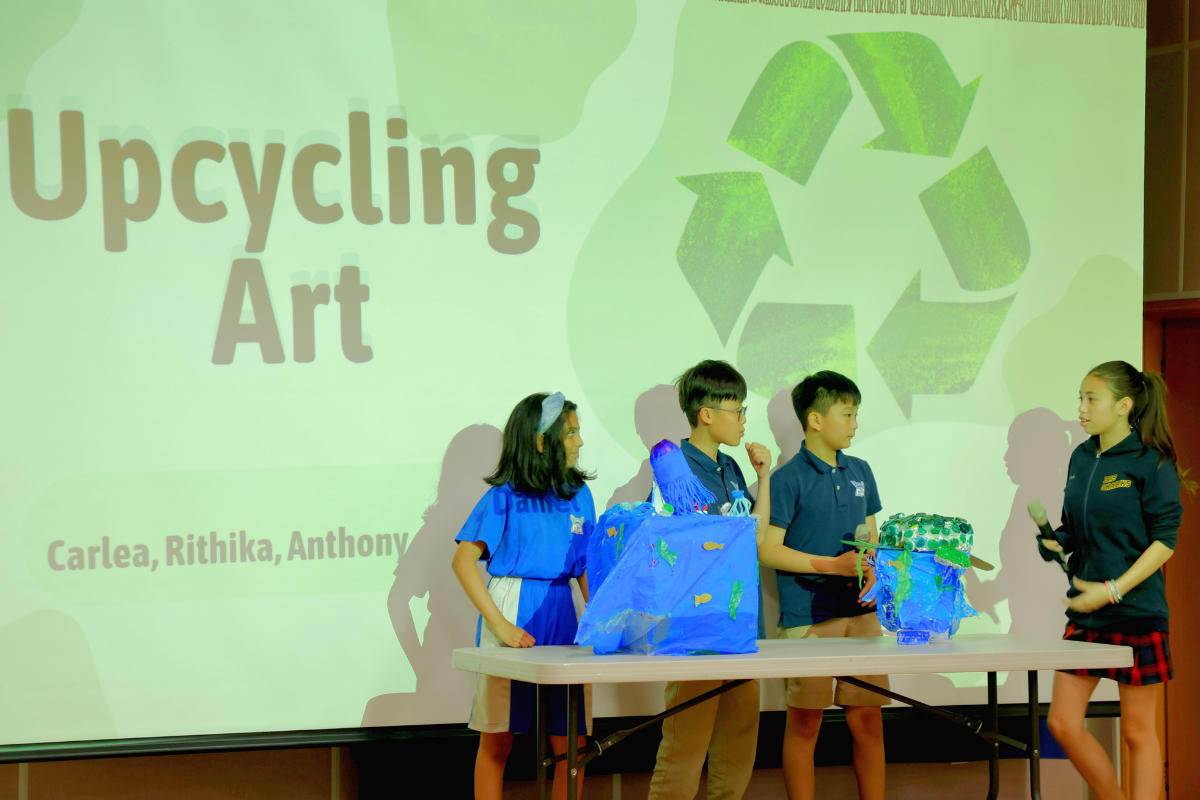
The fourth grade program builds on the strong foundation of the basic skills while also ensuring that students are growing through learning. Students are given the opportunity to exercise previously learned skills while acquiring new ones. They begin to identify cross-curricular learning through independent projects and gain confidence through presentation.
Teachers continue to emphasize the student’s own responsibility for his/her learning beyond the regular school day. The students are given approximately one to one and a half hours of homework each day and are expected to be responsible for daily assignments.
Features of the 4th Grade Program
- Developing the child’s fluidity in reading aloud.
- Identifying structural patterns in informational text to strengthen comprehension.
- Increased emphasis on critical analysis and discussion of reading materials.
- A focus on self-editing by using the stages of the writing process.
- Learning to write fluidly in cursive.
- Thematic units based on authentic literature including: fantasies, fables, myths, legends and fairy tales
- Competence in math computation in the areas of algebra, geometry, measurement and statistics.
- Exploring multiple strategies to logically solve a problem.
- Understanding the diversity of life, the earth’s composition, and the structure and properties of matter and energy.
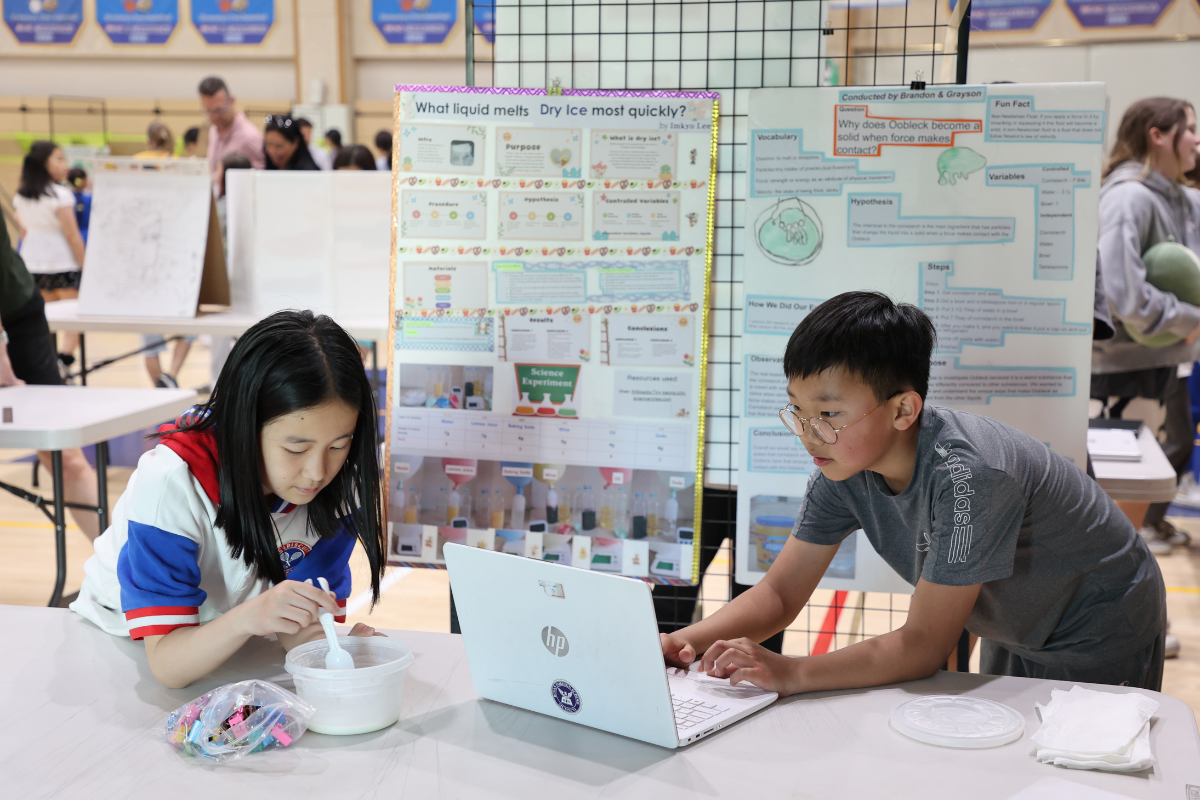
- Being able to use the scientific process to conduct meaningful investigations.
Elementary ELL
Students will be invited to join in the ELL class in order to give them confidence in their English skills. They may join the class for the entire year or until they are assessed at the level of their peers in the appropriate grade level.
Features of the ELL Program
- Gain confidence while working either one on one or in smaller classes.
- Opportunity for each student to spend ample amounts of time practicing skills they may have missed.
- Advance in English skills: phonics, grammar, reading spelling and writing.